
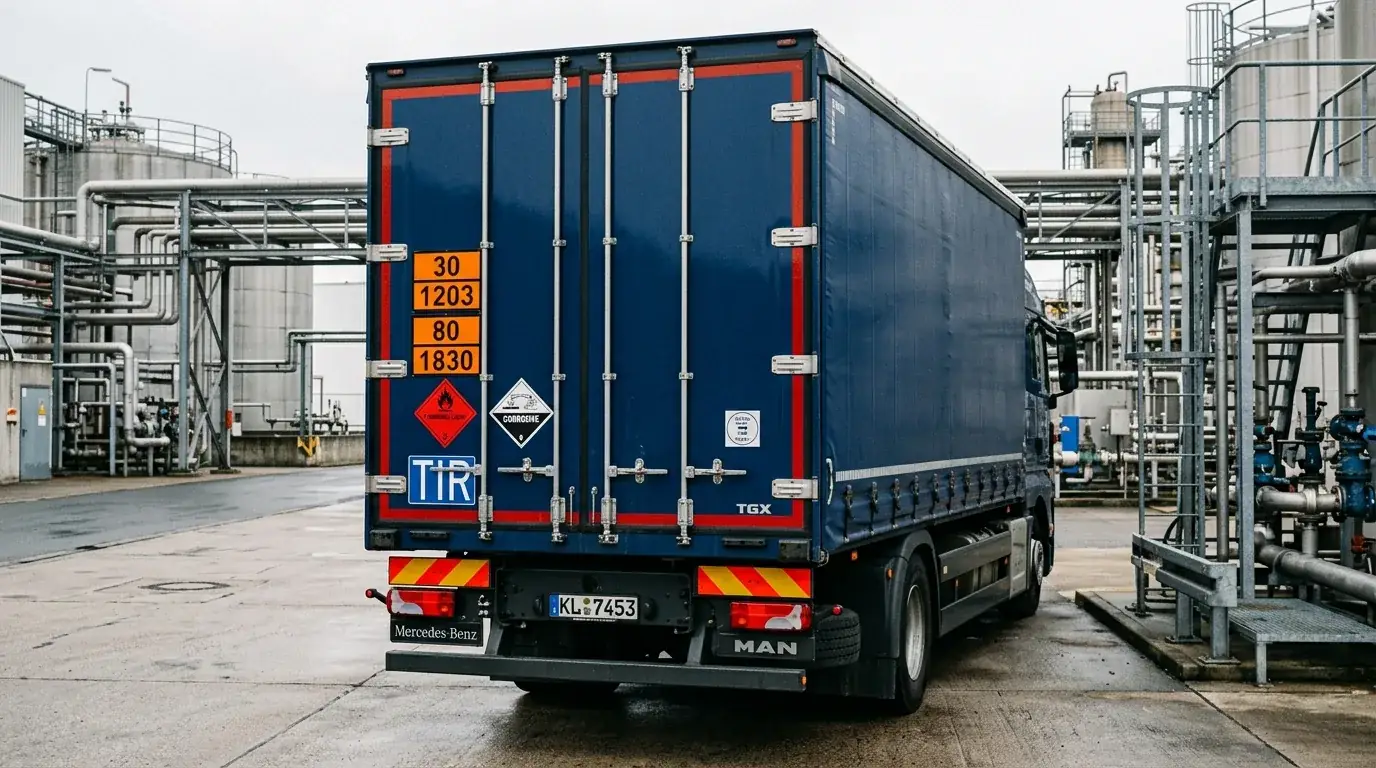
Tank Lining Compatibility Checker
Tank lining compatibility decides which lining suits which chemical, and which combinations destroy the tank or the product. Sixteen common bulk chemicals with suitable and unsuitable linings, the UN number and the trap in each case.
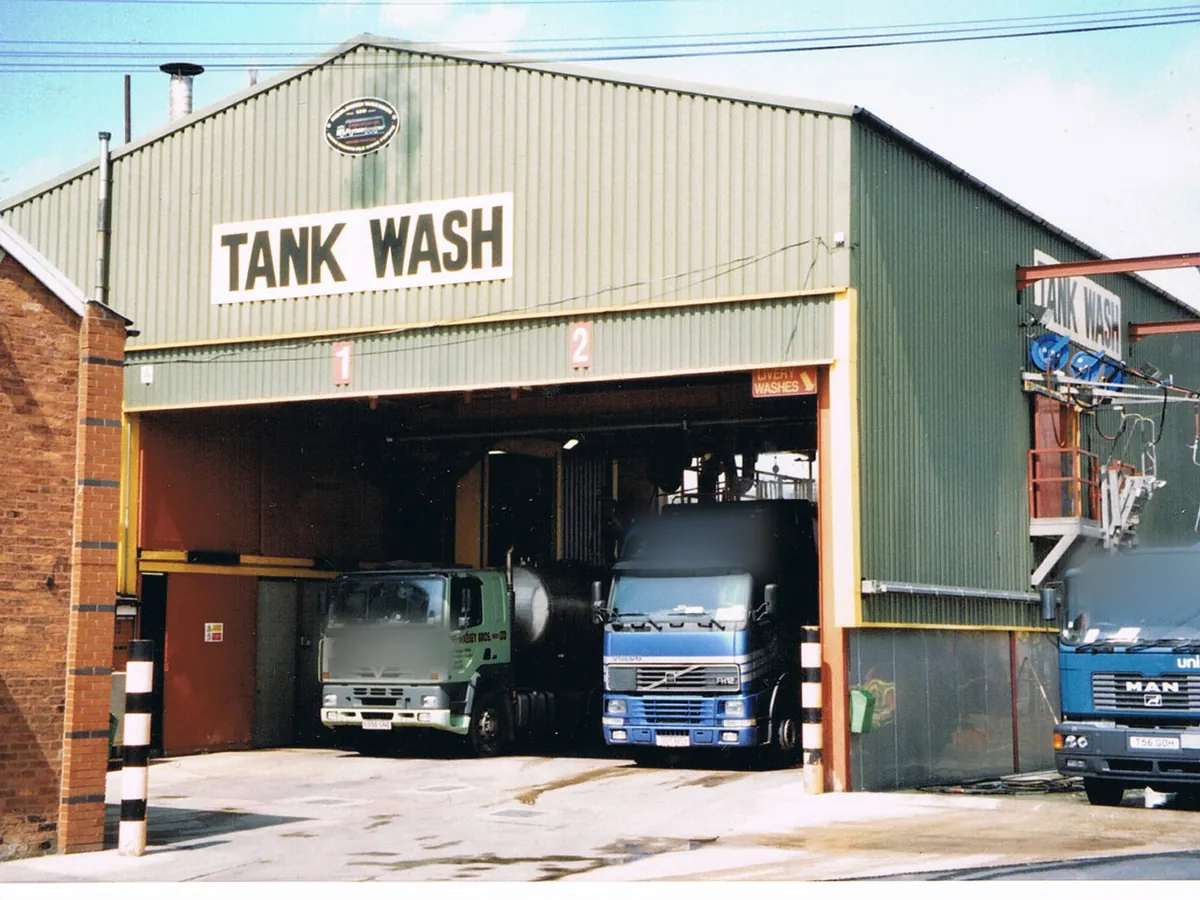
The lining decides whether a tank survives the journey and whether the product arrives to specification. Rubber suits hydrochloric acid but is destroyed by oxidisers. Stainless 316L suits concentrated sulphuric and nitric acid but is attacked by hydrochloric.
Hydrofluoric acid dissolves glass and silicates and needs PTFE or polyethylene. Concentration reverses several of these outcomes, so it must be stated before a tank is booked.
Why this matters more than tank availability
The most expensive mistake in chemical road freight is not a late vehicle. It is the right vehicle with the wrong lining. A rubber lined tank quoted for an oxidiser, or a stainless tank quoted for hydrochloric acid, produces a rejected load at the plant gate at best, and a damaged tank plus a contaminated batch at worst.
The trap is that the class alone does not tell you. Hydrochloric acid and concentrated sulphuric acid are both class 8 corrosives with similar paperwork, and they require opposite linings. Concentration matters just as much: sulphuric acid passivates steel when concentrated and attacks it when dilute, which is why a quote given without the concentration is a guess.
Check a product against a lining
Search by product name or UN number. Green is suitable, red is not. This is a planning reference: always confirm against the safety data sheet and the tank certificate before loading.
| Product | UN / Class | Suitable lining | Not suitable | Note |
|---|---|---|---|---|
| Hydrochloric acid | UN 1789 Class 8 | Rubber lined, PE lined | Stainless 316L, mild steel | Chloride attacks stainless. Rubber is the standard choice. |
| Sulphuric acid, concentrated | UN 1830 Class 8 | Stainless 316L, mild steel | Rubber at high concentration | Concentrated acid passivates steel. Dilute does the opposite and attacks it. |
| Sulphuric acid, dilute | UN 1830 Class 8 | Rubber lined, PE lined | Mild steel, stainless | Dilution reverses the behaviour. Always state the concentration. |
| Sodium hydroxide 50 percent | UN 1824 Class 8 | Mild steel, stainless, heated and insulated | Aluminium, unlined rubber at high temp | Crystallises below about 12 degrees. Needs heat held across the lane. |
| Nitric acid | UN 2031 Class 8 (5.1 sub) | Stainless 316L, aluminium | Rubber lined, PE, organic linings | Oxidiser. Rubber and organics are attacked or create a fire risk. |
| Hydrofluoric acid | UN 1790 Class 8 | PTFE lined, PE lined | Glass, glass lined, stainless, ceramic | Dissolves glass and silicates. PTFE or PE only. |
| Phosphoric acid | UN 1805 Class 8 | Stainless 316L, rubber lined | Mild steel | Generally straightforward. Watch temperature on concentrated grades. |
| Oleum, fuming sulphuric | UN 1831 Class 8 | Dedicated carbon steel, heated | Rubber, PE, anything wet | Reacts violently with water. Must stay warm and dedicated. |
| Hydrogen peroxide | UN 2014 Class 5.1 | Passivated stainless, aluminium | Rubber, PE, mild steel, any organic residue | Oxidiser that decomposes on contamination. Cleanliness is critical. |
| Sodium hypochlorite | UN 1791 Class 8 | PE lined, rubber lined | Stainless 316L, mild steel | Chloride content attacks stainless despite looking mild. |
| Ferric chloride | UN 2582 Class 8 | Rubber lined, PE lined | Stainless, mild steel | Aggressive chloride. Rubber standard. |
| Methanol | UN 1230 Class 3 (6.1 sub) | Stainless 316L | Galvanised, some elastomers | Flammable and toxic. Earthing required at transfer. |
| Ethanol and solvents | UN 1170 Class 3 | Stainless 316L | Some elastomer seals | Earthing and vapour return at most terminals. |
| Ammonia, anhydrous | UN 1005 Class 2.3 | Steel pressure tank | Copper, brass, zinc alloys | Pressure equipment. Attacks copper alloys. |
| Bitumen | UN 3257 Class 9 | Insulated and heated, dedicated | Shared chemical tanks | Loaded 150 to 180 C. Must arrive pumpable. |
| Acetic acid | UN 2789 Class 8 | Stainless 316L, PTFE | Mild steel, some rubbers | Glacial grade freezes below about 16 degrees. |
Three rules that catch most of it
First, oxidisers and organic linings do not mix. Nitric acid, hydrogen peroxide and other class 5.1 products attack rubber and organic linings and can create a fire risk with residue. They belong in passivated stainless.
Second, chlorides attack stainless. Hydrochloric acid, ferric chloride and sodium hypochlorite all look manageable and all destroy 316L. They belong in rubber or polyethylene.
Third, the previous load counts as much as the lining. A correctly lined tank carrying a residue of an incompatible product is still the wrong tank. That is what the European cleaning document exists to evidence, and why some products require a dedicated unit rather than a washed one.
Temperature is the second variable
Several products in this table are not just a lining question but a heat question. Fifty percent caustic soda crystallises below about 12 degrees, glacial acetic acid freezes below about 16 degrees, oleum must stay warm to remain workable, and bitumen loads at 150 to 180 degrees and has to arrive still pumpable.
For those loads the tank has to be insulated and usually heated, and the journey has to be planned so the product is not standing through a weekend driving ban. See European driving bans for why that interacts, and bitumen transport for the heated case in detail.
Frequently asked questions
What tank lining is used for hydrochloric acid?
Rubber lined or polyethylene lined tanks. Stainless 316L is not suitable because the chloride content attacks it, despite stainless being the more versatile lining in general.
Can a rubber lined tank carry nitric acid?
No. Nitric acid carries an oxidising subsidiary risk and attacks rubber and organic linings. It requires stainless 316L or aluminium.
Why does concentration change the required lining?
Because some acids behave in opposite ways at different strengths. Concentrated sulphuric acid passivates steel and can be carried in it, while dilute sulphuric acid attacks steel and needs a rubber or PE lining.
What lining is needed for hydrofluoric acid?
PTFE or polyethylene. Hydrofluoric acid dissolves glass, glass linings, ceramics and silicates, which rules out most conventional tank options.
Does the previous load matter if the lining is correct?
Yes. A correctly lined tank still carrying residue of an incompatible product is unsuitable. Cleaning is evidenced with a European cleaning document, and some products require a dedicated unit.
This reference is maintained by Vektor Group, an ADR and chemical freight broker based in Tallinn. Spotted an error or a missing entry? Tell us at info@vektorgroup.eu and we will correct it.
Embed this table
Drop this into your article. The attribution link sits outside the frame, so it is a real link.
<iframe src="https://vektorgroup.eu/embed/tank-lining-compatibility"
        width="100%" height="520" style="border:1px solid #e5e5e5;border-radius:8px"
        title="Tank lining compatibility by chemical product" loading="lazy"></iframe>
<p style="font:14px/1.4 system-ui;margin:8px 0 0">
  Source: <a href="https://vektorgroup.eu/tank-lining-compatibility">Tank Lining Compatibility Checker</a>,
  Vektor Group, CC BY 4.0
</p>Summary for editors
A short summary of what this reference holds. Check it and write your own, the reference stays at the canonical page.
Vektor Group publishes a tank lining compatibility reference for road tanker movements: which lining suits which chemical, which linings fail against it, and the practical note that decides the vehicle. It is free and available under CC BY 4.0: https://vektorgroup.eu/tank-lining-compatibility
Image for your article
A ready-made graphic with the figure and the URL rendered into it, 1200 by 630. Free to reuse under CC BY 4.0.


Caption to copy
Tank lining compatibility for road tanker movements. Vektor Group, CC BY 4.0. vektorgroup.eu/tank-lining-compatibility
Found an error?
This page is maintained. If you spot a mistake, tell us at info@vektorgroup.eu and we will correct it and note the correction.
Source
The compatibility data comes from carrier tank specifications supplied by the carriers in Vektor Group's network. The carrier's specification is the binding basis, this page is a working aid and does not replace it.
Method
The 16 entries were compiled from the tank specifications provided by carriers. Each entry pairs a chemical with a lining material. An editorial review of the entries was carried out.
Limitations
This page lists compatibility for 16 chemical and lining material pairs, not every combination in existence. Temperature, concentration and service history can change compatibility. For a specific load, the carrier's current tank specification is authoritative.
Each of the 16 chemical against tank lining material pairings has not yet been checked against the tank specification sheets the carriers supplied for the specific tank that carried that chemical.
Update cadence
A carrier revising a tank specification, such as changing a lining material or its thickness, triggers a recheck of every pairing that touches that tank. The page is reviewed quarterly even when no carrier reports a change.
Disclosure
The organisation that maintains this reference also arranges the movements it describes, as ADR Transport & Hazardous Goods Transport across Europe. Nothing on this page depends on that. Vektor Group is a commercial road freight brokerage.
This page is published under CC BY 4.0 and is free to reuse. Vektor Group does not sell ADR consulting or training.
- Dataset version
- 2026.08.1
- Last verified
- Licence
- CC BY 4.0
- Data
- tank-lining-compatibility.json (16)
Archived version
This version stays reachable unchanged at its version URL, so a citation does not break when the page is later updated. vektorgroup.eu/v/2026.08.1/tank-lining-compatibility
How to cite
Vektor Group. Tank Lining Compatibility. 2026. https://vektorgroup.eu/tank-lining-compatibility
This table lists 16 chemical and lining material compatibility pairs from carrier tank specifications, it does not replace the carrier's binding specification.