
Research library / Research lists
Research list
Free ADR Resources: 11 Databases and References Compared (2026)
Free ADR resources answer different questions, and the usual mistake is to use one for another's job. These eleven cover the legal text, the official databases, plain references, emergency response, workplace hazards, the CLP classification and the coming ADR 2027 changes.
We read each on its own site on 7 October 2026, and DGSA.es on 11 October, including our own library, and say what it answers, who publishes it and where it stops.
Updated October 202611 sources readRe-read monthly
The order runs from the law to the official databases, then plain references, then the neighbouring systems. No entry paid to be listed.
Contents
Key takeaways
The law is free. UNECE publishes the full ADR 2025 text as free files. (UNECE, 2025)
Official database free since 2025. BAM's DGG-Info and Dataservice have been free since 23 July 2025, reusable under dl-de/by-2-0. (BAM, 2025)
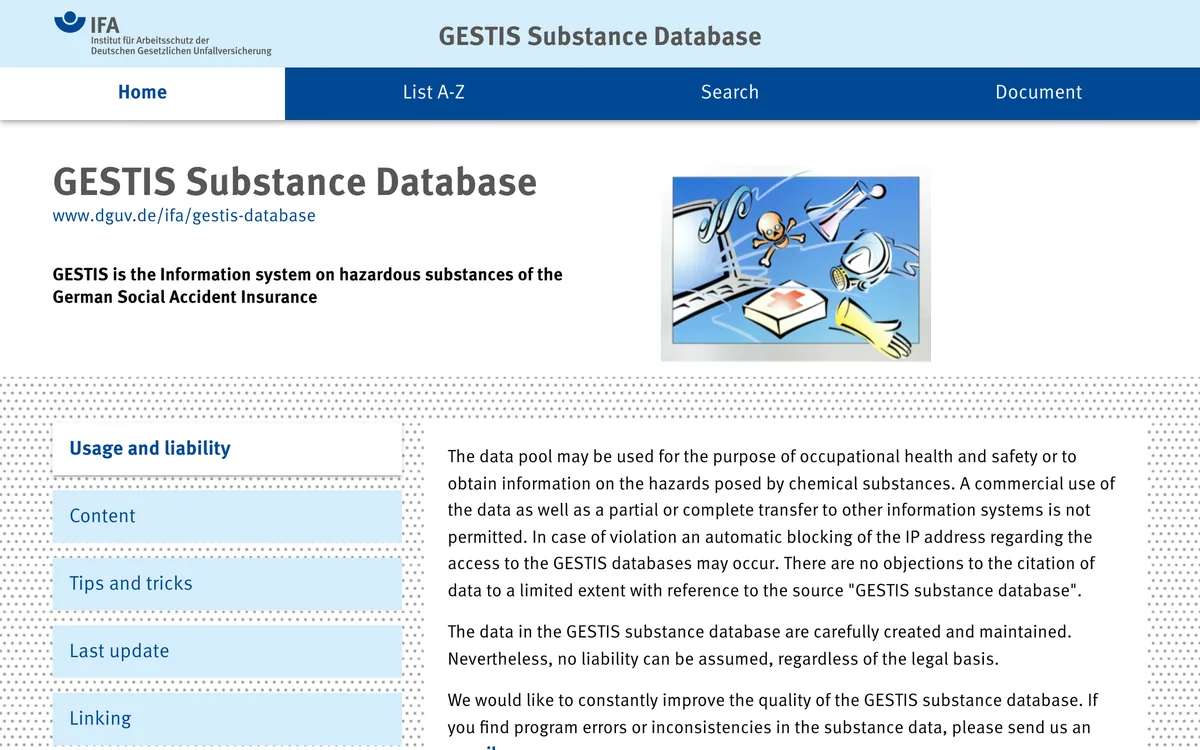
Workplace data is a different system. GESTIS covers about 8,800 substances for workplace safety, with no commercial use or transfer. (DGUV, GESTIS)
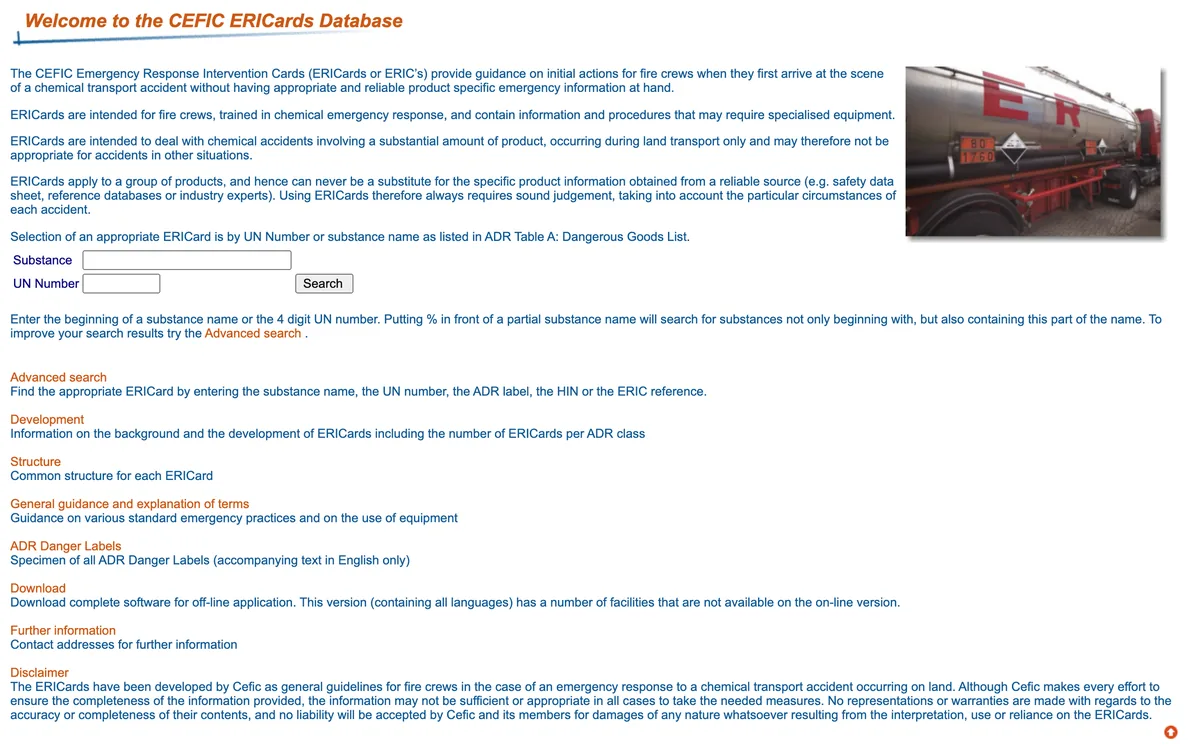
Emergency cards are not instructions in writing. ERICards are aligned with ADR 2021 and come in 19 languages. (Cefic, ERICards)
Reuse terms differ more than content. CC BY, dl-de/by-2-0 and non-commercial terms sit side by side on this list. (Vektor reading, Oct 2026)
Where to look first
Transport classification comes from ADR itself. Workplace hazards, CLP classification and emergency actions are separate systems that share the UN number, and each has its own free reference.
| Your question | Where to look |
|---|---|
| What does ADR say, word for word? | UNECE's ADR 2025 text (entry 1) |
| What applies to this UN number by road, rail, sea and air? | BAM DGG-Info (entry 2) |
| What does this hazard number, label or regime mean in plain words? | Vektor's research library (entry 3) |
| I need dangerous goods data in bulk | BAM's Dangerous Goods Dataservice (entry 4) |
| How dangerous is the substance to people? | GESTIS (entry 5) |
| What should responders do first? | ERICards (entry 6) |
| How is it classified under CLP? | ECHA CHEM (entry 7) |
| Where does an ADR rule come from? | The UN Model Regulations (entry 8) |
| A driver needs the instructions in writing in Polish | UNECE's language versions (entry 9) |
| Is there a derogation for this transport? | UNECE's multilateral agreements (entry 10) |
| What changes for my product on 1 January 2027? | DGSA.es ADR/RID 2025 to 2027 (entry 11) |
How we checked
On 7 October 2026 we opened every entry on its own site and recorded what it answers, whether it searches by UN number, what ADR transport data it shows, what it lets you download, its date and its reuse terms. A page or interface that would not load is marked, never filled in.
We looked up UN 1203 in DGG-Info and toluene in GESTIS to see what each returns. Nothing else was tested beyond reading, and a resource's description of itself is reported as its own claim.
We left out ChemRadar's UN number search, which returned an error on every attempt that day, paid apps and vendor pages, and databases outside Europe.
How the resources compare
| Resource | Publisher | Search by UN number | ADR transport data | Download | Reuse terms |
|---|---|---|---|---|---|
| UNECE ADR 2025 text | UNECE | No, PDF | Yes, it is the source | All rights reserved | |
| BAM DGG-Info | BAM, Germany | Yes | Yes, ADR 2025 | No | dl-de/by-2-0 |
| Vektor ADR research library | Vektor Group | In two references | Partly | JSON | CC BY 4.0 |
| BAM Dataservice | BAM, Germany | No, bulk files | Yes | Excel, CSV | dl-de/by-2-0 |
| GESTIS Substance Database | IFA, German Social Accident Insurance | Not tested | Summary | Print or PDF | Worker protection only |
| ERICards | Cefic | Yes | Partly, ADR 2021 | No | Unaltered, not for sale |
| ECHA CHEM | European Chemicals Agency | Not tested | No, CLP | Substance lists | With credit, not in bulk |
| UN Model Regulations Rev. 24 | UNECE | No, PDF | Partly, the model | By permission | |
| UNECE language versions | UNECE | No | Partly | Not stated | |
| UNECE multilateral agreements | UNECE | No | No | Not stated | |
| DGSA.es ADR/RID 2025 to 2027 | DGSA, Spain | Yes | The 2025 to 2027 changes | CSV | Not stated |
1.UNECE's ADR 2025 text, for the binding wording
The agreement's annexes as UNECE publishes them: two PDF volumes and three corrigenda, with Table A in Part 3 of volume 1. It is free to download and it is the text every other entry on this list is read against.
No picture: unece.org answered our capture with a bot check (HTTP 403) on 7 October 2026, and we do not photograph error pages.
Read on 7 October 2026: unece.org
2.BAM's DGG-Info, for one substance across every transport mode
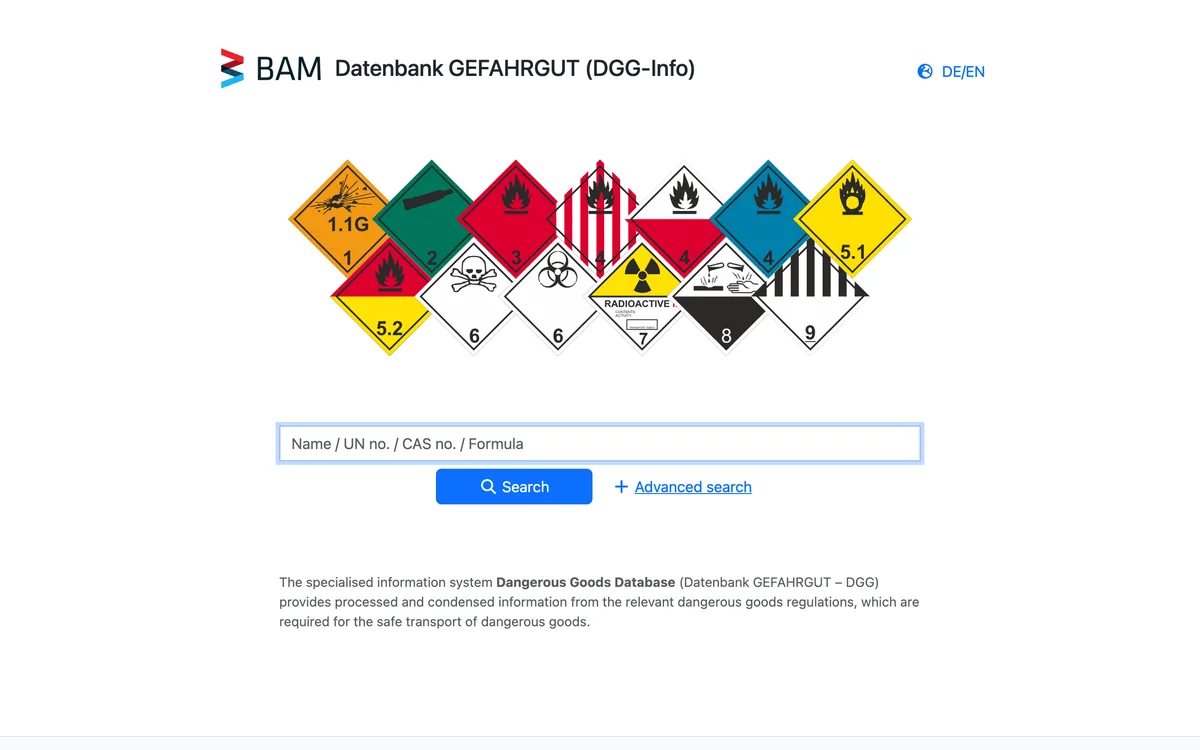
The free search of Germany's Federal Institute for Materials Research and Testing shows what ADR, RID, ADN, the IMDG Code, the ICAO Technical Instructions and the UN Model Regulations say for one UN number or substance. For UN 1203 it shows class 3, packing group II, tunnel code D/E and the orange plate 33/1203.
Read on 7 October 2026: dgg.bam.de
3.Vektor's ADR research library, for plain references in English, German and Dutch
Our library holds working references built from the ADR text: 74 hazard identification numbers with their meaning, the label for each class, the four regimes for limited and excepted quantities, a 34 substance UN number table, a 1,000 point calculator and the ADR 2027 Table A comparison. Each names its source and version and comes in English, German and Dutch with a JSON download.
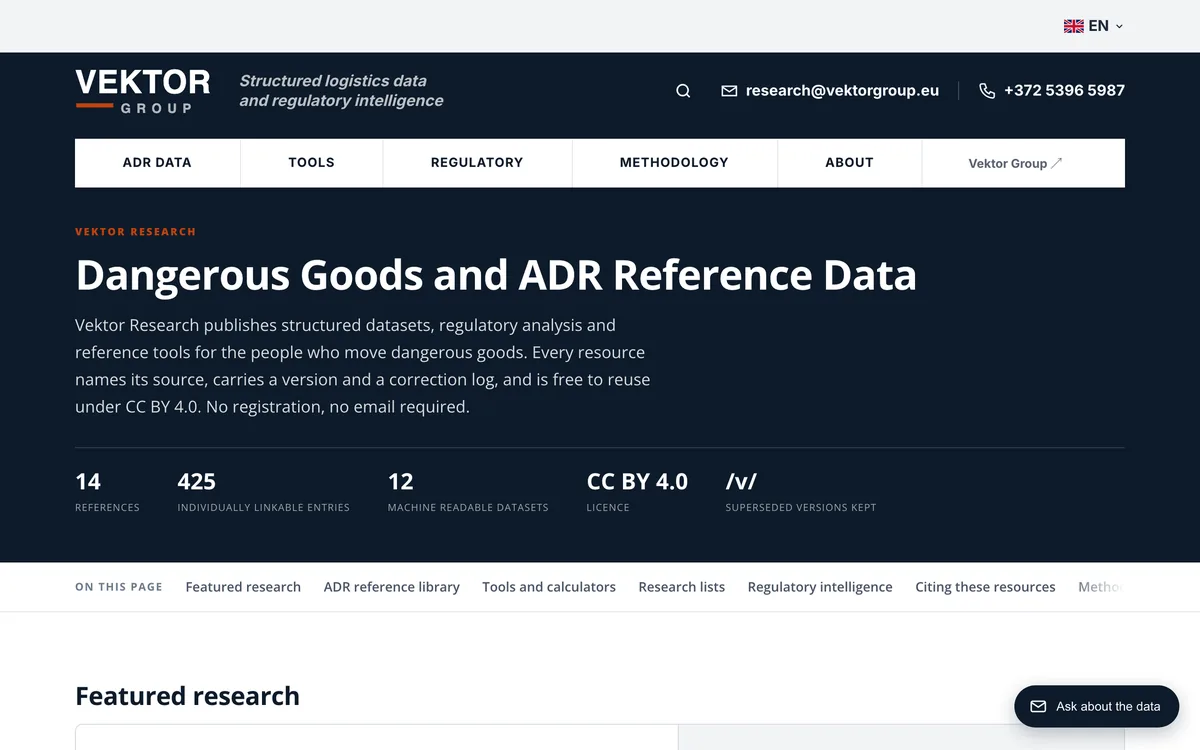
We place it third. The two entries above are the law and the official database; ours is where those are explained and made reusable, and a dangerous goods safety adviser should still confirm a classification in Table A.
Read on 7 October 2026: vektorgroup.eu
4.BAM's Dangerous Goods Dataservice, for bulk data
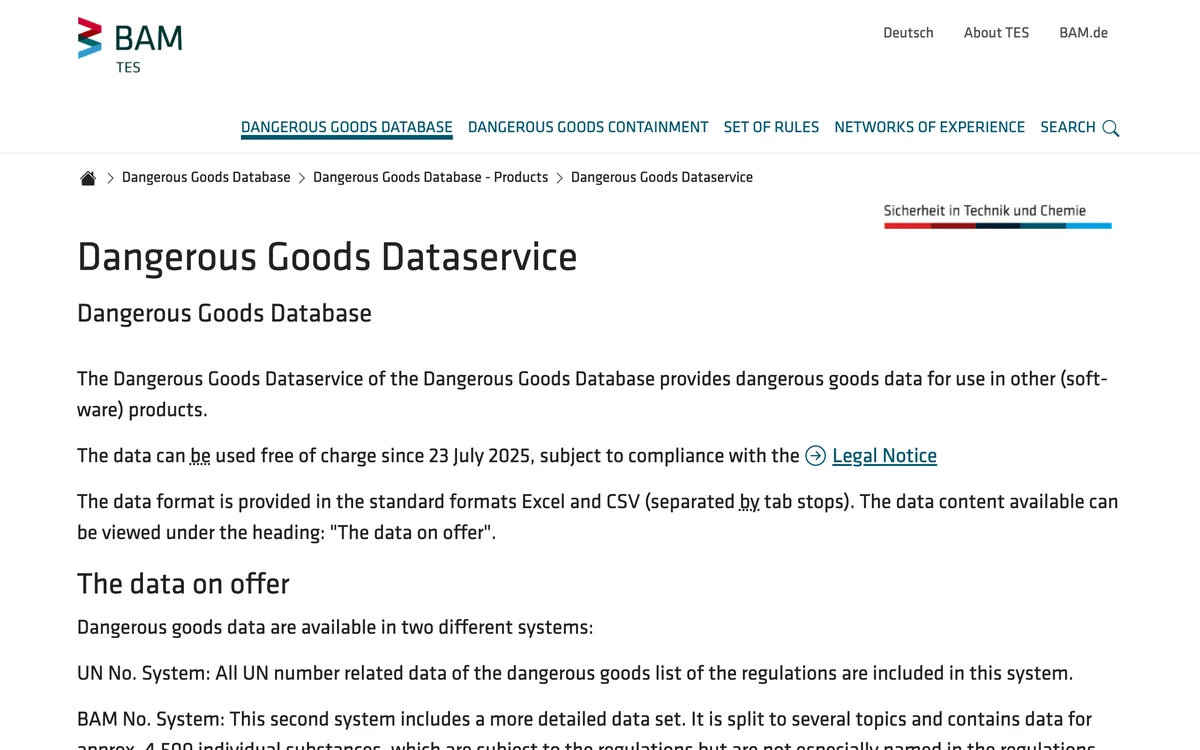
The same database as files: Excel and tab separated CSV per regulation, in a UN number system that holds each regulation's dangerous goods list and a BAM number system covering about 4,500 substances. It has been free since 23 July 2025.
Read on 7 October 2026: tes.bam.de
5.GESTIS Substance Database, for the hazards of a substance at work
The database of the Institute for Occupational Safety and Health of the German Social Accident Insurance covers about 8,800 substances: hazards, protective measures, first aid and CLP classification. Its transport section is a summary; for toluene it shows UN 1294, hazard number 33, class 3, packing group II and the tunnel restriction.
Read on 7 October 2026: gestis-database.dguv.de
6.ERICards, for the first actions at an accident
Cefic's emergency response intervention cards tell trained fire crews what to do first at a road or rail chemical accident, in 19 languages. A card is found by UN number, name, label or hazard identification number.
Read on 7 October 2026: ericards.net
7.ECHA CHEM, for the CLP classification of a substance
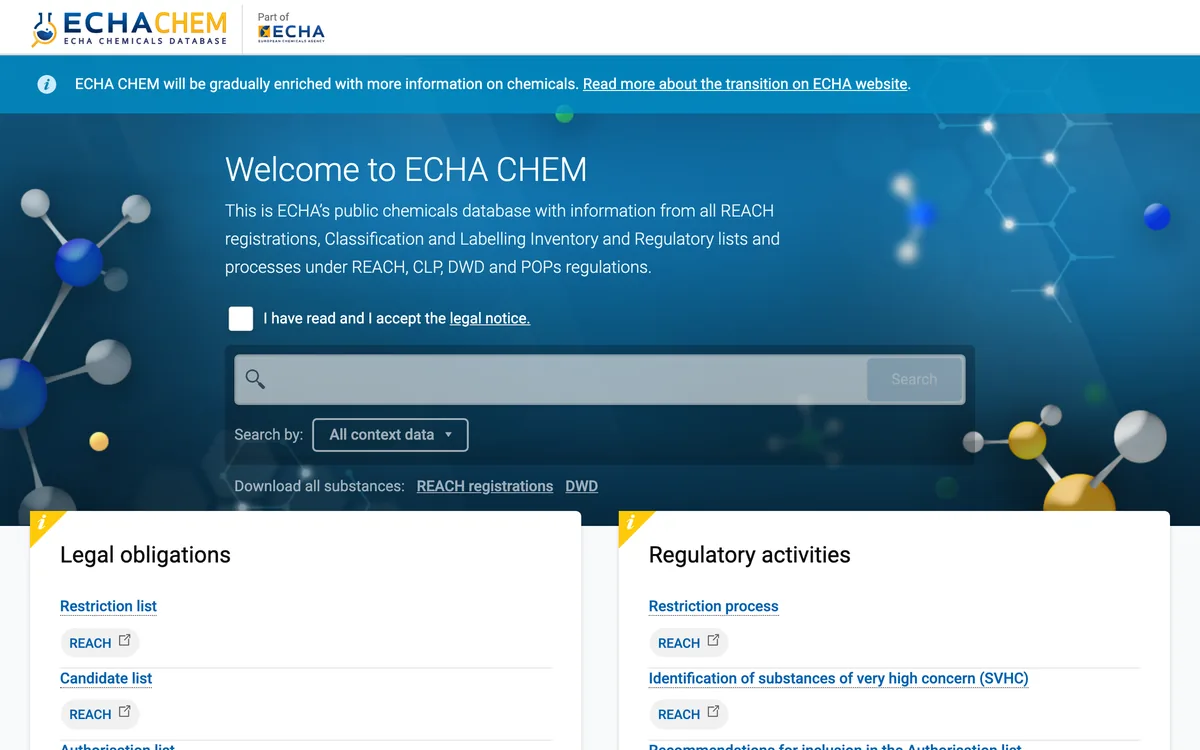
The European Chemicals Agency's database publishes harmonised and notified CLP classifications and REACH registration data. It answers how a substance is classified for supply and use, which is a separate system from transport.
Read on 7 October 2026: chem.echa.europa.eu
8.The UN Model Regulations, for the global model behind ADR
The Orange Book is the model from which ADR, RID, the IMDG Code and the ICAO Technical Instructions take classification, the dangerous goods list, packing and marking. Revision 24 was published on 15 September 2025.
No picture: unece.org answered our capture with a bot check (HTTP 403) on 7 October 2026, and we do not photograph error pages.
Read on 7 October 2026: unece.org
9.UNECE's language versions and instructions in writing, for other languages
UNECE links the ADR texts that governments publish in their own languages, and the instructions in writing in 28 languages. The instructions in writing are the document a driver must carry under ADR 5.4.3.
No picture: unece.org answered our capture with a bot check (HTTP 403) on 7 October 2026, and we do not photograph error pages.
Read on 7 October 2026: unece.org
10.UNECE's register of multilateral agreements, for derogations
Under ADR 1.5.1 two or more countries can agree to derogate from ADR for a time, and UNECE publishes each agreement with its signatories. The register runs from M178 to M372, with the expired agreements listed apart.
No picture: unece.org answered our capture with a bot check (HTTP 403) on 7 October 2026, and we do not photograph error pages.
Read on 7 October 2026: unece.org
11.DGSA.es ADR/RID 2025 to 2027, for what the 2027 changes mean in practice
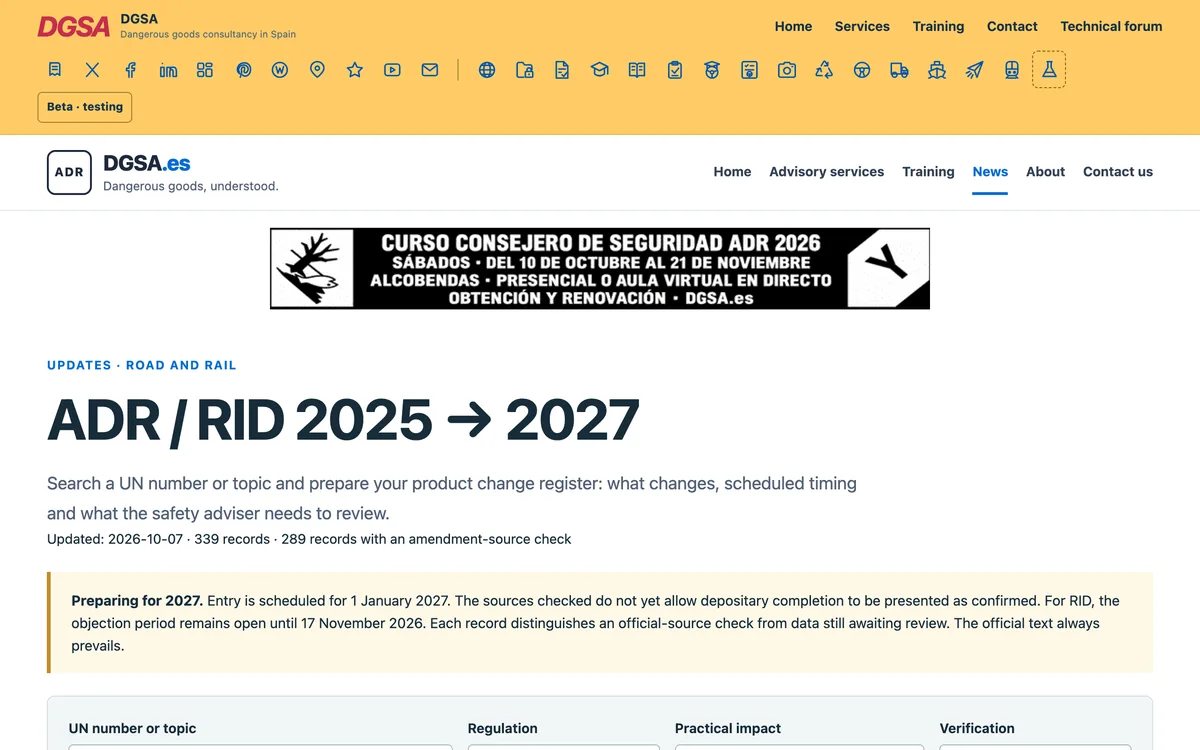
A Spanish dangerous goods safety adviser's search of the coming ADR and RID amendments. On 11 October 2026 it held 339 records, each with the 2025 and the 2027 wording, the practical scope, the timing, the transition and what the safety adviser needs to review. Its ADR records are built on our ADR 2027 Table A data, which it credits, and it adds RID and its own guidance.
Read on 7 October 2026: dgsa.es
What free resources will not give you
None of them classifies a load for you; that is the consignor's job under ADR, usually with a dangerous goods safety adviser. The legal text governs over every database and reference here, ours included.
Free tools also lag behind the rules. On 7 October 2026 BAM's database and our references were on ADR 2025, ERICards on ADR 2021, and no consolidated ADR 2027 existed.
How to choose
| You are | Start with | Then |
|---|---|---|
| Writing a training module | Entry 3 for the plain explanation | Entry 1 for the paragraph to cite |
| Checking a shipment's data | Entry 2 for the UN number | Entry 1 for Table A itself |
| Building software or a study dataset | Entry 4 for bulk data | Entry 3 where you need trilingual names |
| Writing a safety data sheet review | Entries 5 and 7 | Entry 2 for the transport section |
| Planning emergency response | Entry 6 | Entry 9 for the instructions in writing |
| Preparing for ADR 2027 | Entry 11 for what changes and when | Entry 1 once the 2027 text is published |
Common questions
Is BAM's dangerous goods database free?
Yes. BAM made DGG-Info and the Dataservice free of charge from 23 July 2025 under the dl-de/by-2-0 licence. The BAM List, with physical, chemical and material resistance data, remains paid.
Can I reuse GESTIS data in my own tool?
Not for commercial use or transfer into other systems, by GESTIS's own terms. BAM's Dataservice and our JSON datasets allow reuse with credit.
Are ERICards the instructions in writing?
No. ERICards are for trained responders; the instructions in writing a driver carries are the ADR 5.4.3 document, which UNECE publishes in 28 languages.
Why is Vektor's library third?
Because the law and the official database come first on any list of ADR resources. Ours is third because it explains them in three languages and publishes the data for reuse, and every reference names the ADR paragraph it rests on.
Summary
Read ADR in UNECE's text, look a UN number up in BAM's DGG-Info and use our library when you need the explanation or reusable data in English, German or Dutch. For people, use GESTIS; for responders, ERICards; for CLP, ECHA CHEM. Cite the ADR paragraph in every case.
Sources
Download the comparison
The comparison as a file you can reuse under CC BY 4.0, crediting Vektor Group. The facts about each resource belong to its publisher; the selection and the comparison are ours.
Comparison, CSVThe eleven resources with publisher, question answered, UN search, ADR data, download, terms, limit and read dateMore lists and references
About Vektor Research
Vektor Research is the reference side of Vektor Group, a road freight broker in Tallinn that arranges ADR and chemical transport. The research pages are free to read and to reuse under CC BY 4.0, and they carry no offer.
Rene Siller is responsible for the content; how the pages are built is set out in the methodology, and errors are corrected in the open. Editorial questions and error reports go to info@vektorgroup.eu.
No entry paid to be listed and no link carries an affiliate code.
Cite this list
Vektor Research. Free ADR Resources: 11 Databases and References Compared. Vektor Group, 7 October 2026. https://vektorgroup.eu/free-adr-resources