
Research library / ADR & Dangerous Goods
Research list
Chemical Safety Databases: 6 Compared for Scope and Reuse (2026)
Chemical safety databases answer two questions: what a substance does to people, and how it is classed for transport. Most answer the first; one here is built from the transport regulations.
All six are free to read. Free to reuse is a different matter, set by each publisher's terms page.
Updated October 20266 compared
Contents
Key takeaways
Free to read is not a licence. All six can be searched at no charge; only BAM's datasets and our own data carry an open licence. (BAM, terms of use)
GESTIS forbids transfer. IFA does not permit commercial use or transfer to other information systems; linking to a data sheet is welcome. (IFA, GESTIS contents and use)
BAM is the transport source here. BAM's Dangerous Goods Database is built from the dangerous goods regulations and has been fee free since 23 July 2025. (BAM, Dangerous Goods Database)
A CAS match is a lead. PubChem says it is not authoritative for CAS numbers and holds them for under about 4% of all known ones. (PubChem, About)
Mixtures need their own check. A record for one substance does not classify a mixture or a consignment; take classification from the ADR text. (Vektor Group)
Where to look first
Pick the database by the question, not by its name. Transport questions start from a UN number and the regulation; workplace and toxicology questions start from a name or CAS number; reuse questions start from the terms page.
| Your question | Where to look |
|---|---|
| Class, packing group, hazard number and tunnel code for a common UN number | Our UN number database (entry 1) |
| Regulation data for any UN number, in German or English | BAM DGG-Info (entry 2) |
| First aid, spill and storage advice from a CAS number | ICSC (entry 3) or GESTIS (entry 4) |
| CLP classification and labelling at work | GESTIS (entry 4) |
| Which compound a name or CAS number means, and who said so | PubChem (entry 5), reading each value's provenance |
| Emergency response information by UN/NA number | CAMEO Chemicals (entry 6) |
| Can I reuse the data in my own dataset? | The reuse column below |
Six databases by task, provenance and reuse
| Database | Primary purpose | Identifiers supported | Authority and provenance | Free to read | Licensed for reuse | Transport classification limit |
|---|---|---|---|---|---|---|
| Vektor UN number database | Route checks for 34 frequent substances | UN number only | Vektor Group; Dutch names matched to the official Dutch Table A | Yes, EN, DE, NL | Yes, CC BY 4.0 | Mostly common names, not proper shipping names |
| BAM Dangerous Goods Database (DGG-Info) | Data from the dangerous goods regulations | UN number; records hold CAS and EC numbers | BAM, German federal authority | Yes, fee free since 23 Jul 2025, DE and EN | Yes, dl-de/by-2-0; no text and data mining without consent | Closest to transport here; BAM excludes liability for accuracy |
| ILO/WHO International Chemical Safety Cards | Workplace safety cards | Name, CAS, UN, ICSC number | Expert group for ILO and WHO | Yes, 19 language versions listed | No open licence on the card: all rights reserved | Class and pack group for the card's substance only |
| GESTIS Substance Database | Safe handling at work | ZVG, CAS, EC, Index numbers | IFA, German Social Accident Insurance | Yes, DE and EN | No: no commercial use or transfer; linking welcome | Transport data not stated |
| PubChem | Open chemistry database | Names, structures, CAS as depositor data | NIH, hundreds of contributing sources | Yes | Per source; NCBI adds no restriction itself | No transport claim |
| CAMEO Chemicals | Emergency response datasheets | Name, CAS, UN/NA number | NOAA with the US EPA | Yes, for those handling chemicals | Partly: third party data needs written permission | ADR not named |
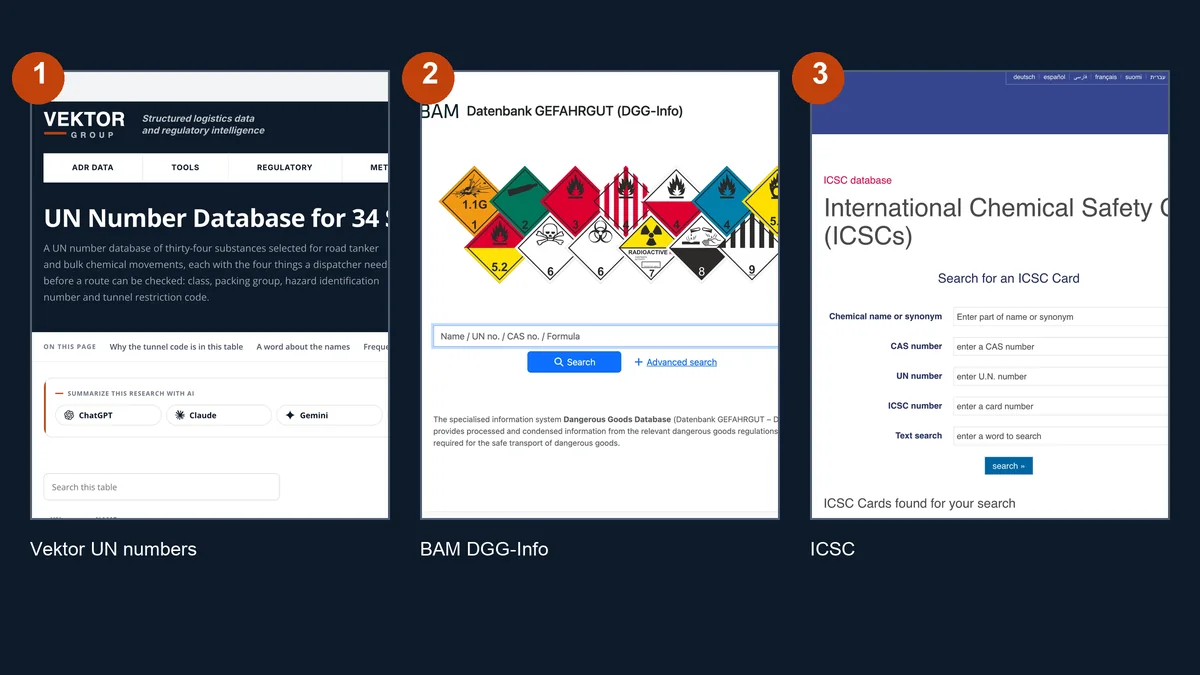
1.Vektor UN number database, for a route check on a common UN number
We built this table for the 34 substances we see most in road tanker and bulk chemical work. Each row gives class, packing group, hazard identification number and tunnel restriction code, the values needed before a route can be checked. Names are flagged by origin; most are common names.
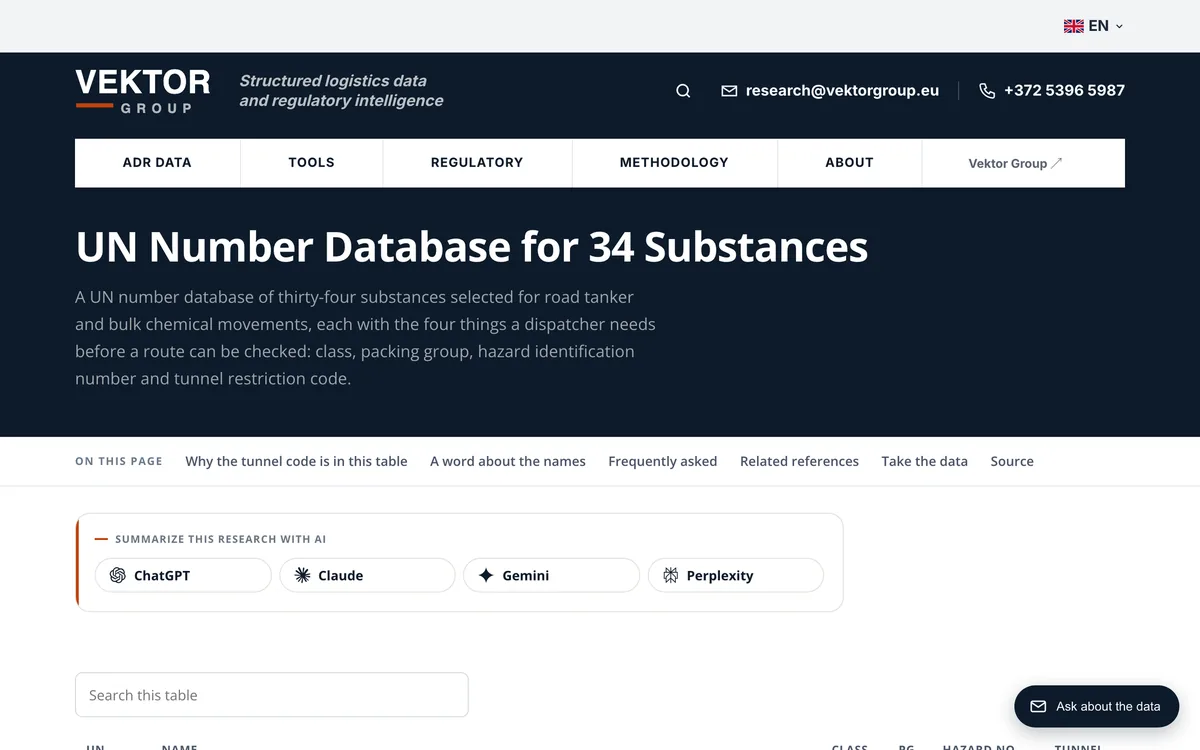
For anything else, use BAM (entry 2). Our ADR 2027 Table A comparison shows what changes for a UN number in 2027.
Source: vektorgroup.eu
2.BAM DGG-Info, for dangerous goods data straight from the regulations
BAM says its Datenbank GEFAHRGUT condenses the information from the dangerous goods regulations needed for safe transport. The DGG-Info search and the Excel and CSV data service have been fee free since 23 July 2025, in German and English; BAM still labels the search a beta. Substance records carry CAS and EC numbers, with ADR, RID, IMDG, ICAO and ADN data.
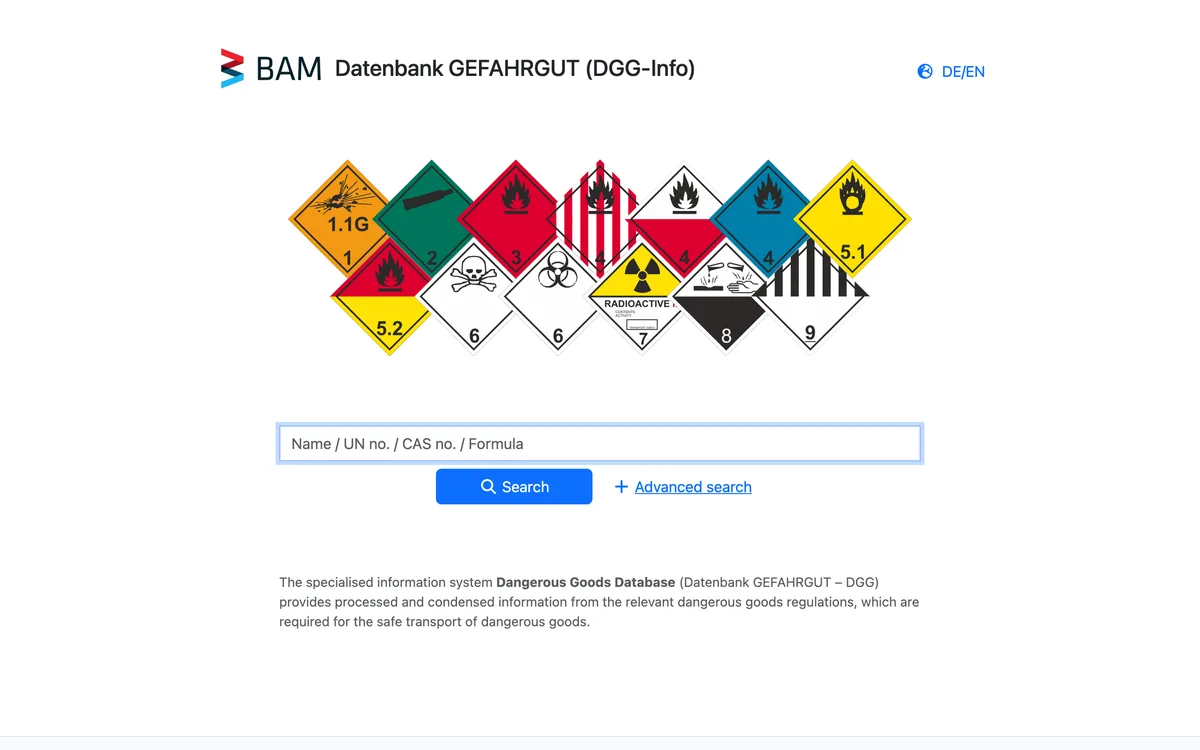
BAM's December 2025 update corrected tank data on nine BAM numbers: record the version you used.
Source: dgg.bam.de
3.ILO/WHO International Chemical Safety Cards, for a workplace safety summary by CAS or UN number
Each card summarises fire, exposure, first aid, spillage and storage information for one substance, searchable by name, CAS, UN or ICSC number. The English list holds 1,699 cards. The benzene card, ICSC 0015 of November 2016, shows UN hazard class 3 and pack group II, prepared by experts on behalf of ILO and WHO.
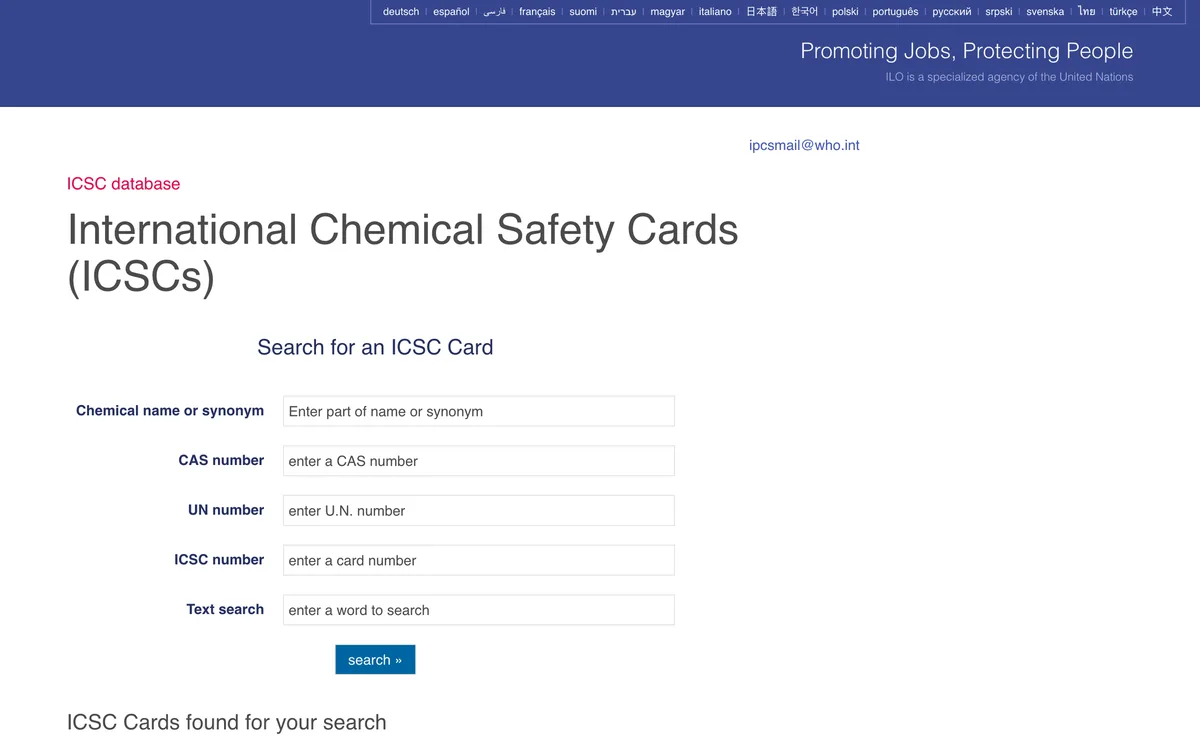
ILO's CC BY 4.0 policy covers its works from 3 May 2023 and sends earlier reproduction requests to rights@ilo.org. As the card reserves all rights, link to it rather than copy it.
Source: chemicalsafety.ilo.org
4.GESTIS, for occupational hazard and CLP classification data
IFA maintains GESTIS for the safe handling of hazardous substances at work and says it covers about 8,800 substances, including GHS classification and labelling under CLP. IFA publishes a table mapping ZVG, CAS, EC and Index numbers for all entries, processed in July 2026.
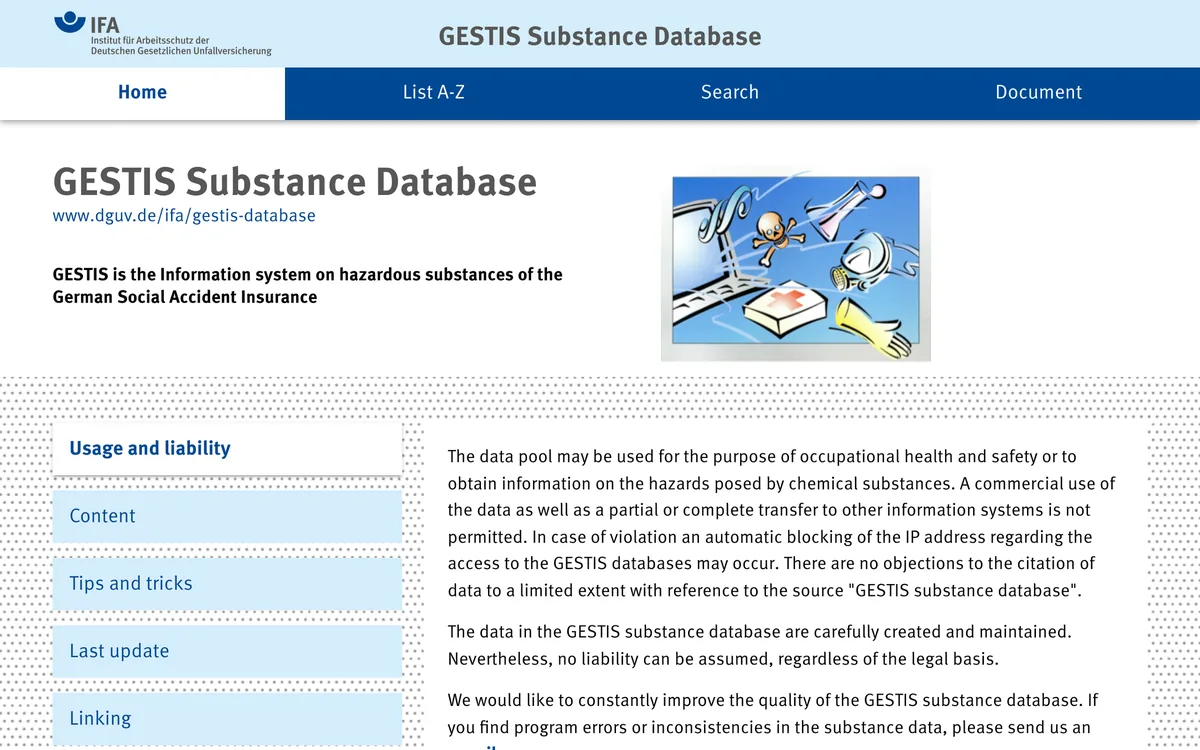
IFA allows limited citing with the source named and welcomes links to data sheets, but not reposted PDFs, and says breaches may get an IP address blocked.
Source: gestis-database.dguv.de
5.PubChem, for identifying a compound and tracing who supplied each value
PubChem calls itself an open chemistry database at the National Institutes of Health, fed by hundreds of sources from agencies to vendors and publishers. About 5 million compounds carry a CAS number, under about 4% of all known ones, and PubChem says it is not authoritative for them.
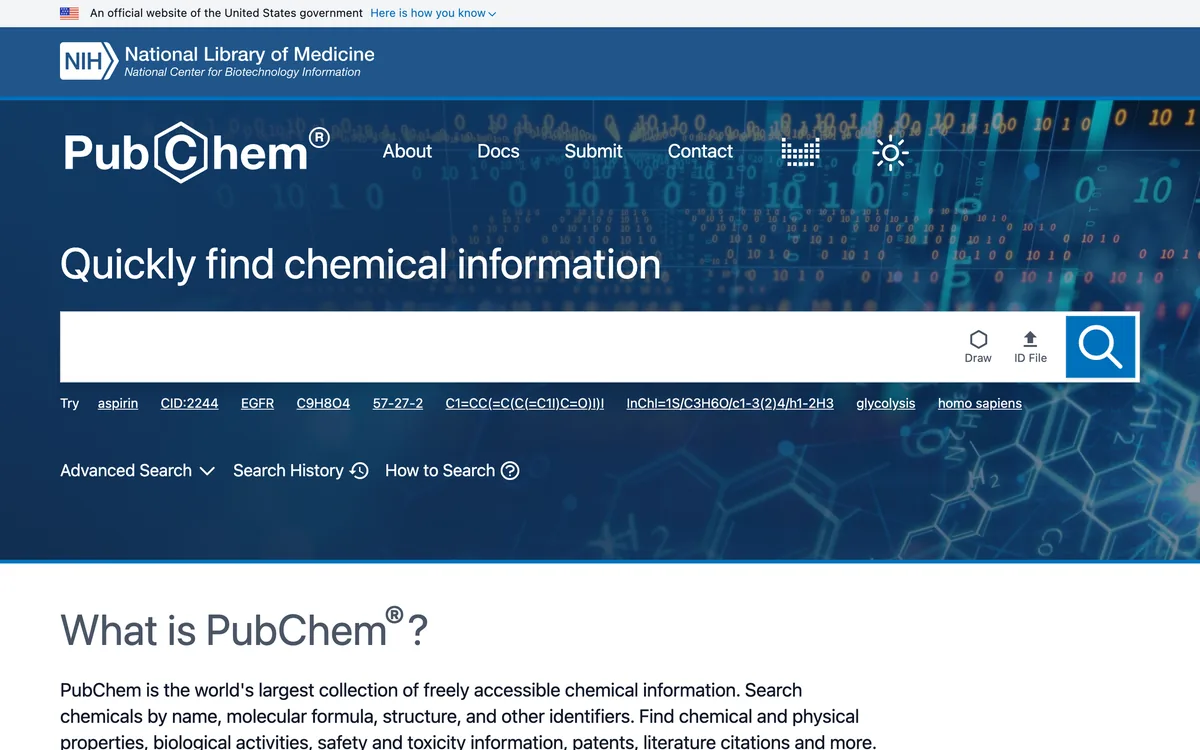
A source may state its own licence in the provenance under each value. Record it before you reuse anything.
Source: pubchem.ncbi.nlm.nih.gov
6.CAMEO Chemicals, for emergency response datasheets by UN/NA number
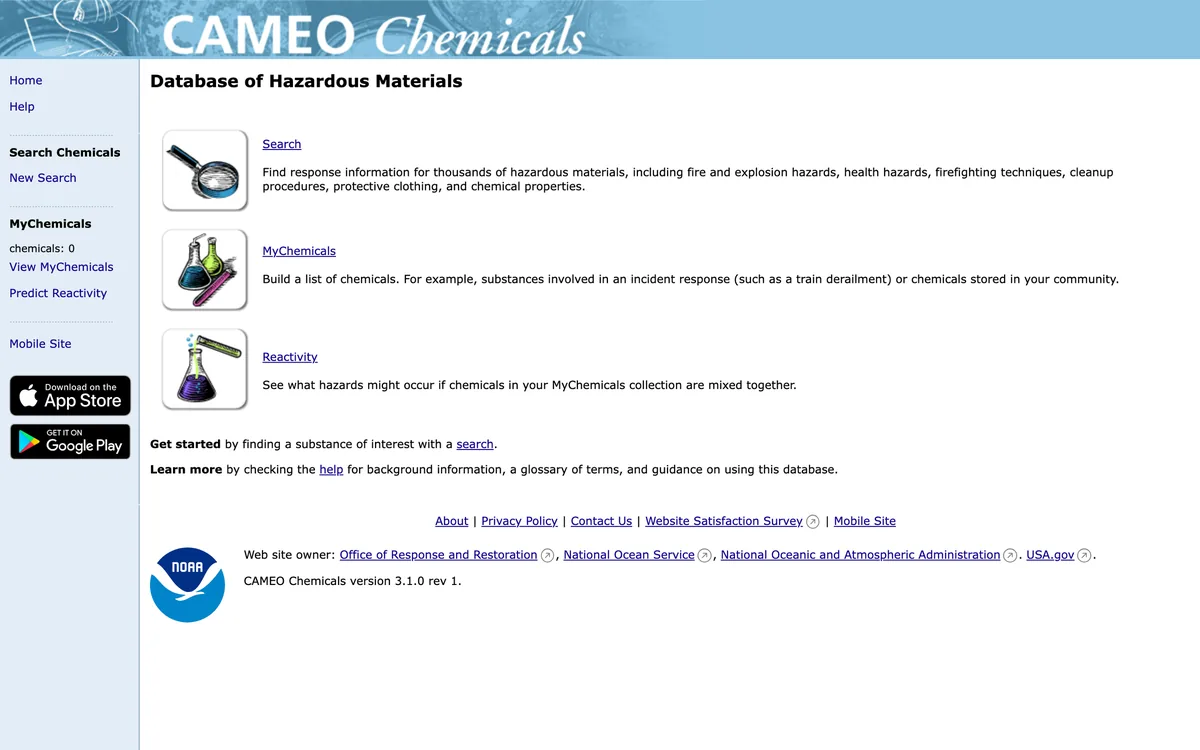
NOAA built CAMEO Chemicals with the US EPA for emergency responders and planners. It searches by name, CAS or UN/NA number; its UN/NA datasheets take shipping information from the Hazardous Materials Table and response information from the Emergency Response Guidebook. ADR is not named.
Source: cameochemicals.noaa.gov
A chemical record is not a shipment classification
A card, a GESTIS sheet or a PubChem compound describes one substance. A consignment may be a solution, mixture or waste, and its UN number and packing group depend on what is actually loaded. Classifying it stays with the consignor, usually with a safety adviser, against the ADR text.
What reuse requires
| Database | Condition you must follow |
|---|---|
| Vektor | Credit Vektor Group |
| BAM | Source line, licence, dataset link, changes marked; no mining without consent |
| ICSC | Ask rights@ilo.org before reproducing |
| GESTIS | Limited citing and links only |
| PubChem | Follow each source's licence |
| CAMEO | Owner's written permission for third party data |
How to document a source
Record enough that a colleague can reopen the exact record: identifier, record address, version, date accessed and terms. Link records rather than copying them unless the terms grant reuse.
Corrections
Terms change, as BAM's did when it moved from paid licences to an open one in 2025. If a row here is out of date, report it to info@vektorgroup.eu and we will correct and date it.
Source record for a chemical safety lookup
One record per database you rely on.
| Field | What to write | Your answer |
|---|---|---|
| Question | What you needed to know | |
| Identifier searched | Name, CAS, EC or UN number as entered | |
| Substance or mixture | Which, with concentration if known | |
| Record URL | Direct link to the record | |
| Record version | Date, card number or version shown | |
| Date accessed | The day you looked it up | |
| Provenance | Publisher or contributing source of the value | |
| Reuse terms | Licence or restriction, quoted | |
| Linked or copied | And the permission relied on | |
| Transport source | ADR edition and Table A entry, or adviser | |
| Checked by | Name and date |
Common questions
Which chemical safety database is free to reuse?
BAM's datasets carry dl-de/by-2-0 and our UN number data CC BY 4.0. PubChem depends on each source; ICSC cards reserve all rights; GESTIS forbids transfer; CAMEO restricts third party data.
Can I find a UN number from a CAS number?
ICSC and CAMEO Chemicals search by CAS and show a UN or UN/NA number. The number you ship under depends on the actual product, so confirm it against the ADR text.
Can I copy GESTIS data into my own database?
No. IFA does not permit transfer to other information systems. You may cite limited data with the source and link its data sheets.
Does a safety card classify my shipment?
No. It describes one substance; a shipment may be a mixture. Classification stays with the consignor and the ADR text.
Summary
For route values, our table or BAM DGG-Info; for workplace hazards, ICSC or GESTIS; for compound identity, PubChem; for emergency response, CAMEO Chemicals. All six are free to read, few are free to reuse, and none classifies a shipment.
Sources
Downloads
More lists and references
About Vektor Research
Vektor Research is the reference side of Vektor Group, a road freight broker in Tallinn that arranges ADR and chemical transport. The research pages are free to read and to reuse under CC BY 4.0, and they carry no offer.
Rene Siller is responsible for the content; how the pages are built is set out in the methodology, and errors are corrected in the open. Editorial questions and error reports go to info@vektorgroup.eu.
No entry paid to be listed and no link carries an affiliate code.
Cite this list
Vektor Research. Chemical Safety Databases: 6 Compared for Scope and Reuse (2026). Vektor Group, 8 October 2026. https://vektorgroup.eu/resources/dangerous-goods/chemical-safety-databases